
 English
  Spanish
  French
  German
  Polish
  Portuguese
  Italian
  Romanian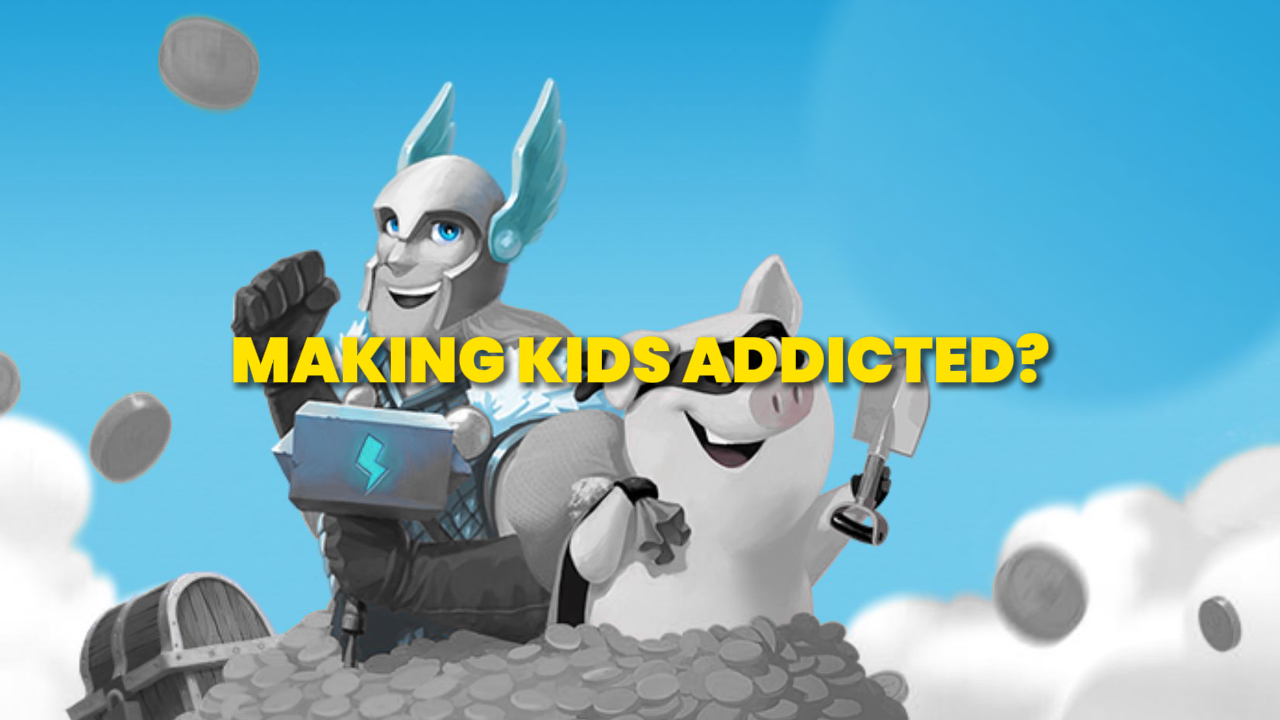
If your child plays Coin Master, you’ve probably noticed something unusual. They keep coming back to the game again and again, even when nothing major is happening.
At first, it looks like a simple mobile game. Spin the wheel, collect coins, build villages. But many parents start to wonder:
Is Coin Master just a game, or does it feel like gambling?
This question is becoming more common as more kids spend time on mobile games that use reward-based systems.
Why Coin Master Feels Addictive
Coin Master is built around a very simple mechanic: spinning a slot machine.
Every spin gives you a random result:
- Coins
- Attacks
- Raids
- Nothing useful
This randomness is important. It creates a feeling of excitement because you never know what you’ll get next.
This system is known as a variable reward loop — the same principle used in casinos.
Sometimes you win big. Sometimes you get nothing. That uncertainty keeps players engaged.
Does Coin Master Count as Gambling?
Technically, Coin Master is not classified as gambling in most countries.
There is usually no direct way to convert rewards into real money.
However, the mechanics are very similar to gambling systems:
- Spinning for random outcomes
- Chasing rewards after losses
- Limited spins that encourage waiting or paying
- Emotional highs and lows
For adults, this may just be entertainment. But for kids, it can shape behavior.
Why Kids Are More Vulnerable
Children and teenagers are more affected by reward-based systems because their brains are still developing.
Games like Coin Master can:
- Encourage instant gratification
- Build habits of repeated checking
- Create frustration when rewards stop
- Make them want “just one more spin”
Over time, this can turn into compulsive behavior.
Not full gambling addiction—but a similar pattern.
Signs Your Child Might Be Overusing the Game
Not every player becomes addicted, but there are warning signs:
- Playing multiple times a day just to check spins
- Getting frustrated or angry when spins run out
- Thinking about the game even when not playing
- Spending money without understanding value
If you notice these patterns, it’s worth paying attention.
How Coin Master Encourages Spending
The game uses a common mobile strategy:
Run out → wait → or pay.
When spins are gone, players can either wait for refill or buy more.
For kids, this can create pressure:
- “I just need a few more spins”
- “I was so close to winning”
This is where the experience starts to feel closer to gambling behavior.
Is Coin Master Dangerous for Kids?
Not necessarily—but it depends on how it’s used.
For casual play, it’s just a game.
But without limits, it can:
- Encourage unhealthy screen habits
- Introduce gambling-like mechanics early
- Lead to unnecessary spending
The risk is not the game alone—it’s the lack of awareness around it.
What Parents Can Do
You don’t need to completely ban the game. Instead, focus on control and understanding.
1. Set Time Limits
Limit how often your child can play each day.
2. Disable In-App Purchases
This removes the biggest risk factor.
3. Talk About How the Game Works
Explain that outcomes are random and not “skill-based.”
4. Encourage Other Activities
Balance gaming with offline hobbies.
A Healthier Way to Play
If kids understand the system, they are less likely to get hooked.
Instead of chasing rewards, they can treat it as casual entertainment.
The key difference is this:
- Unaware player → keeps spinning endlessly
- Aware player → plays with limits
Final Thoughts
Coin Master is not traditional gambling, but it does use similar psychological systems.
For kids, that can be powerful.
The goal isn’t fear—it’s awareness.
When used responsibly, it’s just another mobile game. But without limits, it can easily turn into a habit that feels much harder to control.